Choosing between Downtown Stuart and suburban Stuart is not just about where a home sits on the map. It is really about how you want your days to feel, how you like to get around, and what kind of home fits your plans. If you are weighing a walkable historic setting against a quieter residential area with more variety, this guide will help you compare the tradeoffs and make a more confident move. Let’s dive in.
Downtown Stuart at a Glance
Downtown Stuart is best understood as the compact historic core around Main Street and the riverfront. According to the City of Stuart’s historic survey, this area spans 37 city blocks and includes about 200 historic buildings. The city also describes downtown as the center of shops, restaurants, entertainment, arts, and riverfront activity.
That compact footprint shapes the entire experience. If you want daily access to dining, events, galleries, and the waterfront, downtown offers the most concentrated amenity base in Stuart. It is the part of town where lifestyle often takes the lead in the home search.
Suburban Stuart at a Glance
Suburban Stuart is less of a single district and more of a collection of nearby residential neighborhoods and zip code pockets. In practical terms, that means you will find a broader range of housing styles, price points, and lot sizes than you typically see in the downtown core. It also means each neighborhood can feel quite different from the next.
This wider suburban patchwork often appeals to buyers who want more detached-home options or a quieter residential setting. Downtown is still nearby, but day-to-day life in these areas is usually more car-oriented. That difference can matter just as much as square footage or price.
Housing Styles and Architecture
Downtown homes feel historic and mixed-use
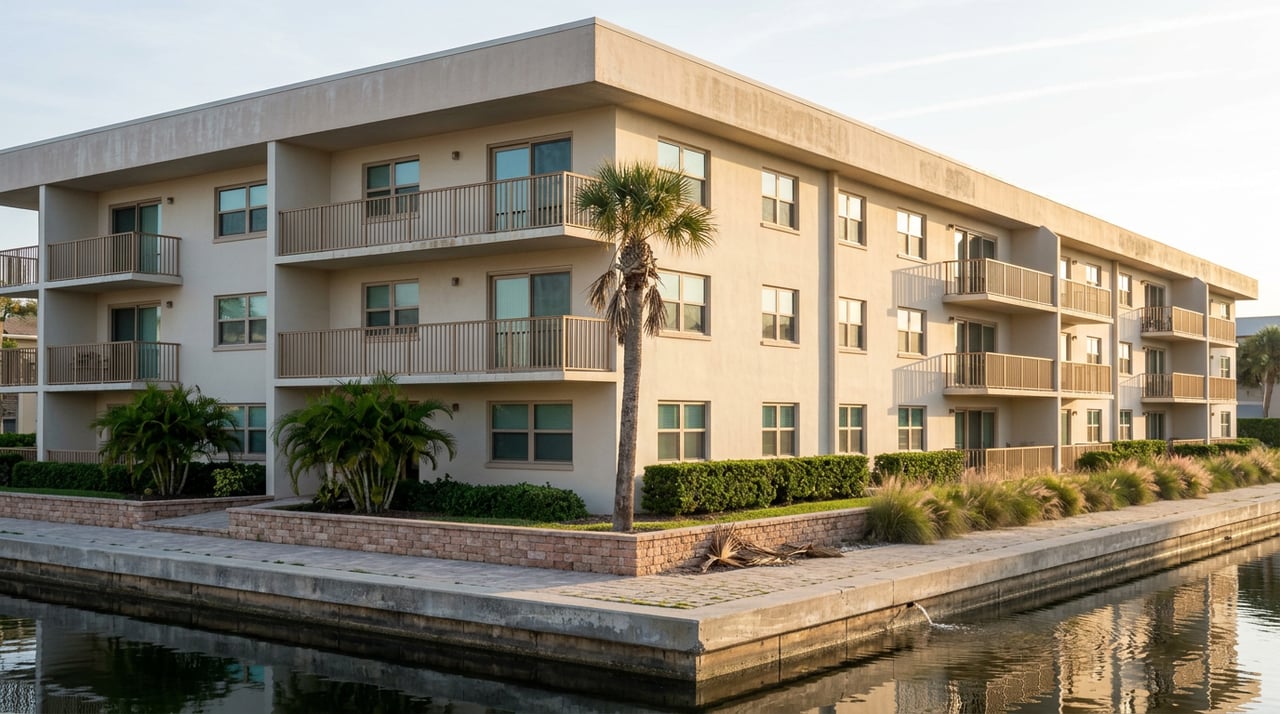
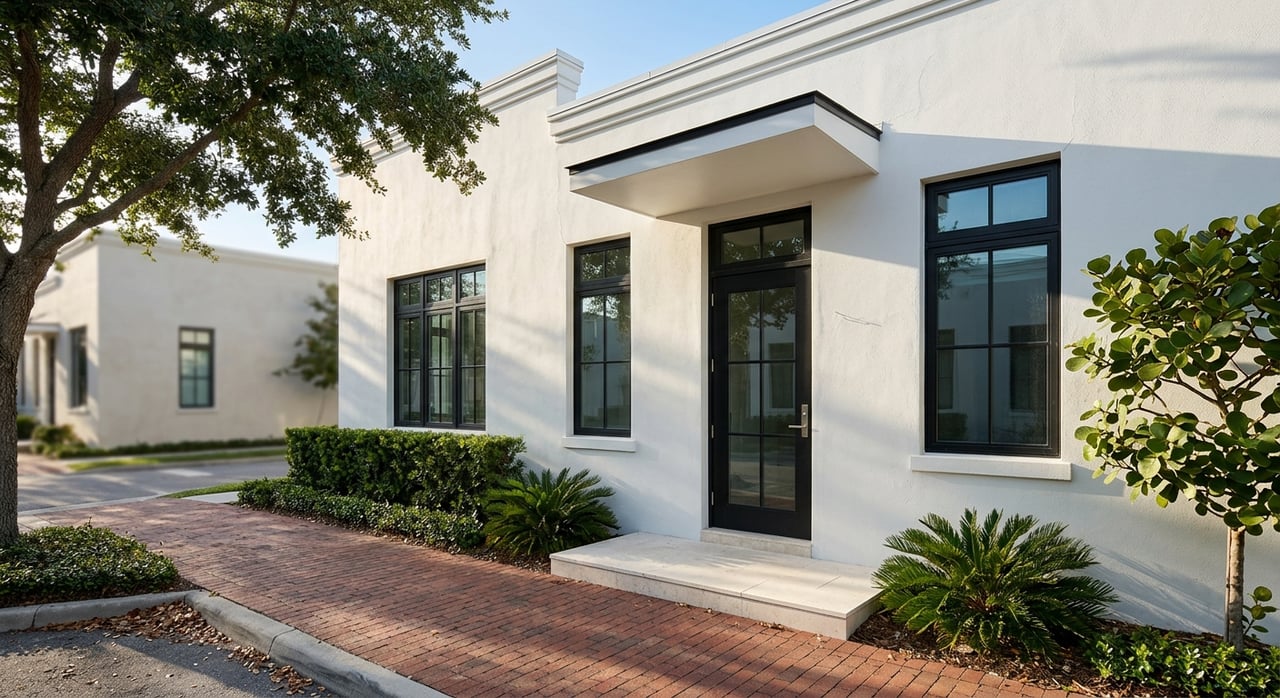
Downtown Stuart has a distinctive built environment shaped by its history. Most commercial buildings in the core date from 1912 to 1950 and are one- and two-story masonry structures. In nearby residential pockets, the city survey notes frame vernacular, bungalow, Mediterranean-inspired, ranch, and Minimal Traditional homes, along with historic residences, apartments, and newer riverfront condominiums and apartments.
For buyers, that translates into more architectural character and a stronger sense of place. It can also mean less uniform inventory, since downtown includes everything from older homes to condo living near the water. If you value charm, walkability, and a more urban coastal feel, that mix may be a major plus.
Suburban homes offer more variety
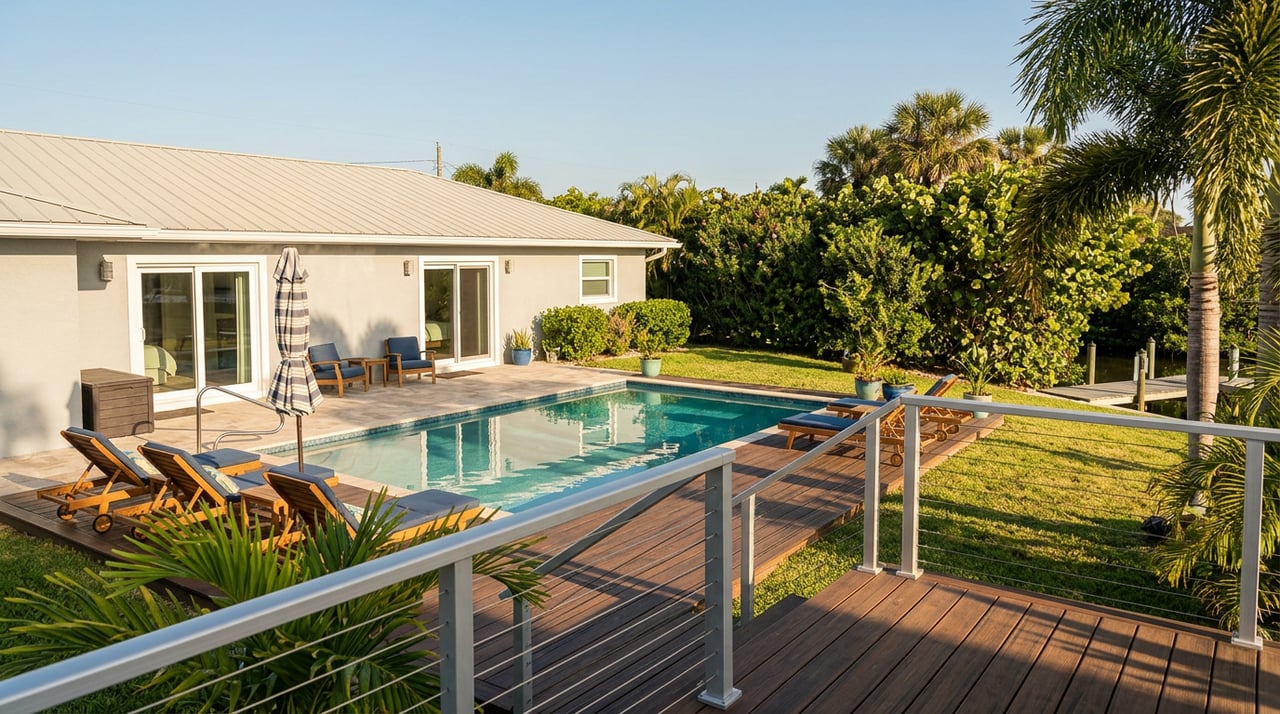
Suburban Stuart gives you a much wider mix of property types. Current examples in and around Stuart include single-family homes, townhomes, manufactured-home communities, gated settings, golf-oriented communities, and newer CBS construction. That variety can open more paths depending on whether you want low maintenance, more yard space, or a home with renovation potential.
This is one reason suburban Stuart tends to attract a broad range of buyers. Some want a move-in-ready house in a more residential pocket, while others may be looking for a property they can update over time. From a practical standpoint, the suburban market gives you more ways to match home type with budget and lifestyle.
Home Prices: Wide Ranges Matter
Downtown pricing is not one-size-fits-all
Downtown Stuart pricing is best viewed as a spectrum rather than a single benchmark. Zillow’s Old Historic Downtown page lists an average home value of $372,634 as of February 28, 2026, but active inventory is limited and often leans toward higher-end condo and townhome listings. The research report notes examples on Seminole Street around $1.05 million to $2.1 million.
That is why averages can be misleading here. With a small number of listings and a mix of older homes, condos, and riverfront properties, downtown pricing can vary sharply by property type, condition, and location. If you are comparing downtown options, it helps to look at each property in context rather than rely on a headline number.
Suburban pricing covers a broader band
Suburban Stuart also spans a wide price range, but with more neighborhood variation. Zillow pages in the research report show North River Shores averaging $264,582, while nearby areas such as Port Salerno, Sandpiper Bay, Southbend Lakes, and Bessey range from the low $300,000s to the high $500,000s. Florida Realtors Q4 2025 MLS data adds more context, with median single-family sale prices of $587,500 in zip code 34997 and $689,000 in zip code 34994.
The key takeaway is simple: suburban Stuart is broad, not uniform. You may find more flexibility here depending on the neighborhood, home style, and updates needed. For buyers who want more choices in detached homes, that wider spread can be a meaningful advantage.
Lifestyle and Daily Routine
Downtown is the most walkable option
If your ideal day includes walking to coffee, dinner, live music, or the riverfront, downtown Stuart stands out. Historic Downtown Stuart reports more than 50 locally owned shops, restaurants, and galleries, while the city highlights year-round live entertainment at the Lyric Theatre and Riverwalk Stage. The City Docks also connect directly to the Riverwalk.
That concentration of amenities creates a very specific rhythm. You can be close to activity without planning every outing around a drive. For buyers who care about convenience and a lively setting, downtown often delivers the strongest lifestyle match.
Suburban areas feel quieter and more residential
Suburban Stuart offers a different pace. In many neighborhoods, the feel is calmer, more spread out, and more centered on residential streets than storefronts or event spaces. You are still typically a short drive from downtown amenities, but your daily routine is less likely to revolve around walking from place to place.
For some buyers, that is exactly the goal. A quieter home base can be a better fit if you value privacy, more separation from commercial activity, or a traditional neighborhood layout. Neither lifestyle is better across the board. It depends on how you want to live.
Commuting and Getting Around
Stuart’s mean travel time to work is 24.6 minutes, based on U.S. Census Bureau QuickFacts data for 2020 through 2024. The city’s historic survey identifies U.S. 1, Florida A1A, and State Road 76 as major thoroughfares, with SR 76 connecting to I-95. These routes shape how many residents move through town and beyond it.
Downtown has the clearest edge if you want a lighter-car lifestyle. The city runs a free TRAM service with a Downtown Loop and an East Stuart Loop, and Martin County Transit provides fixed-route service, commuter buses to Palm Beach County, and weekday service windows that support regional commuting. In suburban areas, commuting can still be straightforward, but daily life is generally more vehicle-dependent.
Schools and Address-Specific Planning
If school access is part of your search, the most important thing to know is that school assignment depends on the exact property address. Martin County School District serves about 16,000 PK-12 students across 12 elementary schools, 5 middle schools, and 3 comprehensive high schools. The district uses address-based attendance boundary maps and also offers School Choice and controlled open enrollment in certain cases.
Downtown-adjacent examples in the research report include J.D. Parker Elementary, Stuart Middle, and Martin County High School. In south Stuart, nearby examples include Port Salerno Elementary, Murray Middle, and South Fork High School. The safest way to compare options is to verify the specific address rather than assume a home falls into a certain attendance area because it is labeled downtown or suburban.
Which Stuart Setting Fits You Best?
Downtown Stuart may fit if you want:
- A compact, historic setting
- Walkable access to shops, dining, galleries, and events
- Closer proximity to the riverfront and downtown activity
- Condo, apartment, or character-home options in a mixed-use area
Suburban Stuart may fit if you want:
- More detached-home choices
- A quieter, more residential daily environment
- A broader range of neighborhood styles and price points
- More flexibility on home type, lot size, or renovation potential
A Smart Way to Compare Homes
When buyers compare Downtown Stuart and suburban Stuart, the best approach is to focus on how each option supports your real life. Start with the basics: how often you want to drive, what type of home you prefer, how much maintenance feels comfortable, and whether you want to be in the middle of activity or a step removed from it. Those answers usually narrow the field quickly.
From there, compare homes by address-specific details. In Stuart, pricing, school assignments, commute patterns, and even neighborhood feel can shift from one pocket to the next. A local, property-by-property view is often more useful than broad labels alone.
Whether you are drawn to the energy of the historic core or the flexibility of a more residential setting, the right choice comes down to fit. If you want help comparing neighborhoods, home types, or properties with improvement potential, Renny Realty can help you evaluate your options with clear local insight.
FAQs
What is the difference between Downtown Stuart and suburban Stuart?
- Downtown Stuart is the compact historic core near Main Street and the riverfront, while suburban Stuart refers to surrounding residential neighborhoods and zip code pockets that are generally more spread out.
Is Downtown Stuart more walkable than suburban Stuart?
- Yes. Downtown Stuart has the strongest concentration of shops, restaurants, galleries, waterfront areas, and city TRAM access, while suburban areas are typically more car-oriented.
Are home prices higher in Downtown Stuart or suburban Stuart?
- Both areas have wide price ranges, but downtown inventory is smaller and can include higher-end condo and townhome listings, while suburban Stuart covers a broader spread across many neighborhoods and home types.
Are schools different in Downtown Stuart and suburban Stuart?
- School access depends on the exact property address. Martin County School District uses attendance boundaries, so it is important to verify zoning for any specific home.
Is suburban Stuart better for single-family homes?
- Suburban Stuart generally offers more single-family home options, along with townhomes, manufactured-home communities, gated settings, and newer CBS construction.
Is Downtown Stuart a good fit if I want less driving?
- Downtown Stuart may be a stronger fit if you want a lighter-car lifestyle because it offers walkable amenities, a free downtown TRAM, and access to local transit options.